At a glance:
- The health benefits of a hammam start with the skin: steam at 40-50°C and near 100% humidity open the pores and help remove dead skin cells.
- Humid heat triggers vasodilation, which supports blood circulation, a mechanism documented among regular heat-bathing practitioners.
- A hammam session runs in rounds of 15 to 20 minutes in the steam, for a total of 1.5 to 2 hours including scrub and rest.
- A hammam is not recommended for people with a history of cardiovascular disease, uncontrolled high blood pressure, or during pregnancy.
What do hammam health benefits actually cover?
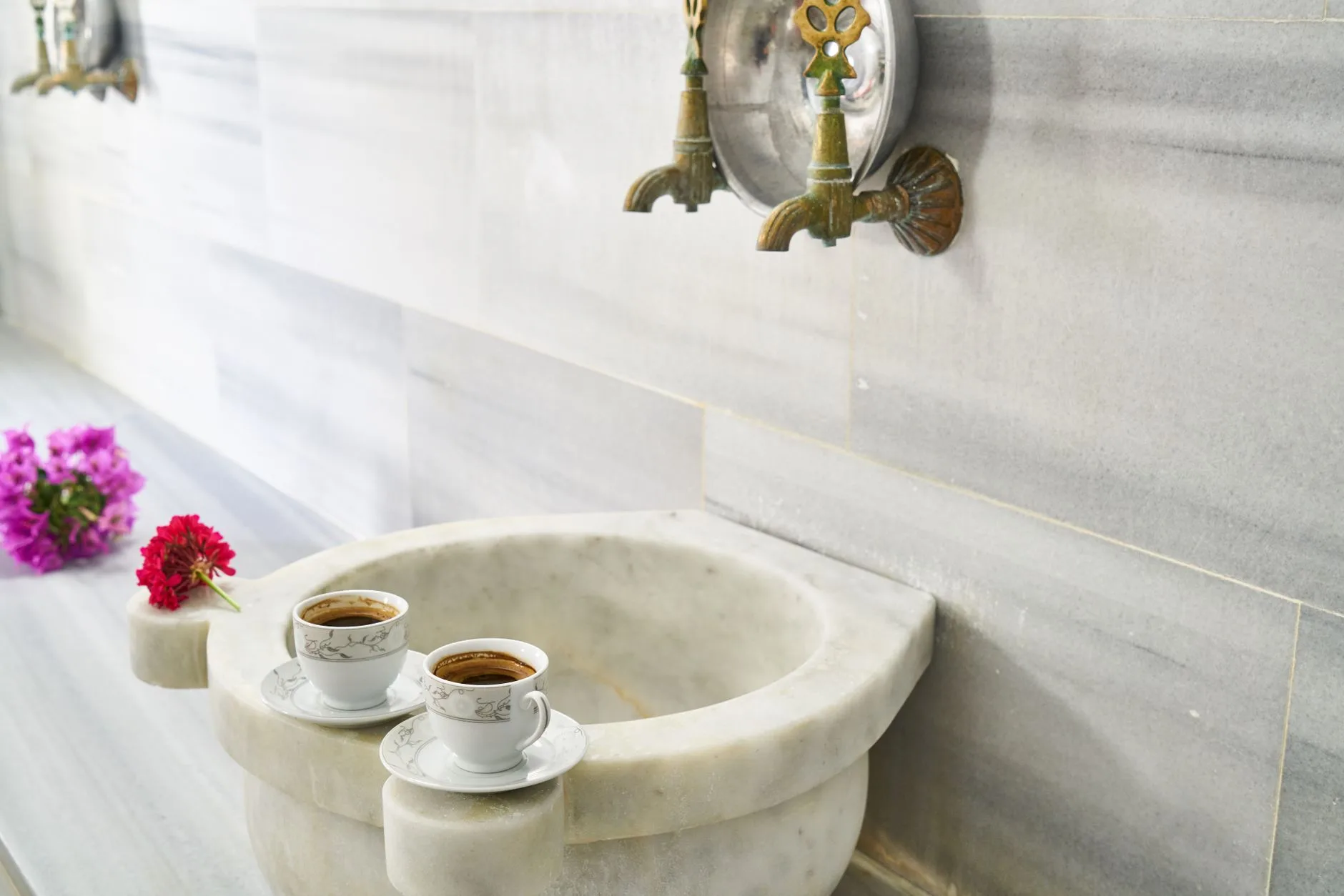
The health benefits of a hammam come from exposure to humid heat, in a room kept between 40 and 50°C with humidity close to 100%. This atmosphere, inherited from the steam baths of North Africa and the Ottoman Empire, acts on the skin, blood circulation, the respiratory tract and overall relaxation at the same time.
The principle has stayed the same for centuries: humid heat makes the body sweat and widens blood vessels, while steam hydrates and softens the skin’s surface. This combined thermal and respiratory mechanism explains most of the effects felt after a session.
A ritual paired with body scrubbing
A hammam is rarely practised on its own: it almost always precedes an exfoliating treatment with black soap and a kessa glove. The benefits of a black soap scrub complement the steam’s effect by removing dead skin cells more effectively once they have been softened by the heat.
The effects of a hammam on the skin
The most immediate effect of a hammam shows on the skin. Humid heat opens the pores and softens the layer of dead cells that builds up on the surface, which then makes deep cleansing easier.
- Deep cleansing: steam opens the pores and loosens the impurities trapped inside them.
- Prepping for exfoliation: softened skin scrubs more easily, without the need for aggressive rubbing.
- A visible glow: once the session ends, skin looks smoother and brighter for several days.
A routine to adapt to each skin type
The intensity of the heat and the frequency of sessions should be adjusted to how sensitive the skin is. The guide on choosing a facial treatment for your skin type also helps adapt the complementary treatments used after a hammam, especially for reactive skin.
Hammam and blood circulation: what effects on the body?
The humid heat of a hammam triggers vasodilation: blood vessels widen to release internal heat more efficiently, which temporarily increases blood flow to the skin and muscles.
A mechanism studied among regular heat bathers
This heat-driven vasodilation has mostly been studied among regular sauna users, a practice based on dry rather than humid heat. A large Finnish study, the Kuopio Ischemic Heart Disease Risk Factor Study led by researcher Jari Laukkanen and published in 2015 in JAMA Internal Medicine, followed several hundred middle-aged men over roughly two decades. It found that regular sauna users had a lower risk of fatal cardiovascular events than occasional users.
“Regular and frequent sauna bathing is associated with a reduced risk of fatal cardiovascular events.” Laukkanen et al., JAMA Internal Medicine, 2015
This study concerns the sauna and its dry heat, not the hammam directly. Both practices rely on the same physiological principle of heat exposure, which allows a cautious comparison of their effects on circulation, without directly applying a figure from one practice to the other.
Muscle relaxation after exercise
Vasodilation also improves blood flow to the muscles, which is why many practitioners associate a hammam session with a feeling of muscle relaxation after exercise or a long day on their feet.
Stress, relaxation and mental wellbeing
Beyond its physical effects, a hammam is mostly sought after for how relaxing it feels. The heat, the relative quiet of the steam room, and the break from screens and outside demands all encourage a gradual release of tension.
This pause, often extended with a rest period and a cup of tea, contributes to a general sense of wellbeing rather than a measurable medical effect. That is why many first-time spa visits start with a hammam, before moving on to other treatments.
A decongestant effect on the respiratory tract
Hot water steam has a recognised decongestant effect on the nose and sinuses. Some establishments add essential oils to the steam, such as eucalyptus, to reinforce this feeling of clearer breathing.
This effect stays temporary and does not replace medical treatment for a persistent cold or a chronic respiratory condition: it is a short-term comfort, not a cure.
Hammam or sauna: what are the health differences?
A hammam and a sauna share the same goal, exposing the body to heat, but their conditions differ noticeably.
| Criterion | Hammam | Traditional sauna |
|---|---|---|
| Type of heat | Humid (steam) | Dry |
| Typical temperature | 40 to 50°C | 70 to 100°C |
| Humidity level | Close to 100% | 10 to 20% |
| Main benefit sought | Skin, respiratory tract, relaxation | Circulation, muscle relaxation |
| Length of one round | 15 to 20 minutes | 5 to 20 minutes |
Both practices are often offered at the same venue, alternated with cold showers to stimulate circulation. The choice between the two mostly comes down to each person’s tolerance for dry versus humid heat.
The ritual of a session and its role in the benefits
The benefits of a hammam also depend on how the session unfolds. The hammam session guide follows a fairly set sequence: a warm shower, rounds in the steam, black soap application, a kessa glove scrub, then rest.
Each step prepares the next. Steam softens the skin before scrubbing, and the rest period afterwards lets the body gradually return to a normal temperature, which limits the discomfort of too sudden a temperature change.
What precautions and contraindications apply?
A hammam is not recommended for everyone. Several situations call for caution or prior advice from a healthcare professional:
- History of cardiovascular disease: heat puts strain on the heart and circulation, which can be risky with uncontrolled high blood pressure or a heart condition.
- Pregnancy: prolonged heat exposure is not recommended during pregnancy.
- Fever or an ongoing infection: a hammam adds extra thermal stress to a body that is already weakened.
- Abrupt hot/cold transitions: alternating steam and a cold shower without easing into it can cause discomfort, especially for people sensitive to changes in blood pressure.
The health programme Allodocteurs, produced by France Télévisions, notes that this abrupt shift between humid heat and cool air should be avoided for people with a history of cardiovascular disease, and that staying hydrated before and after the session remains essential. When in doubt about one’s own physical condition, a doctor’s advice before a first session remains the safest precaution.
How to make the most of a hammam’s benefits
A few simple habits make for a comfortable session:
- Stay hydrated before and after the session; water is the only recommended drink in humid areas.
- Step out at the first sign of discomfort: there is no need to stay the full announced time if the heat becomes hard to bear.
- Space out sessions: once or twice a week is enough for a comfort routine, without trying to multiply rounds.
- Allow a rest period after the steam, rather than moving straight into physical activity.
For a fuller experience that includes other treatments beyond the hammam itself, hammam or spa: what is the difference helps choose the option best suited to the time available and the treatments sought.
Frequently asked questions
What are the health benefits of a hammam?
A hammam works on several levels: the humid heat opens the pores and helps remove dead skin cells, it encourages vasodilation and therefore blood circulation, and the session itself is a genuine moment of relaxation that helps release tension. The steam also has a decongestant effect on the nose and sinuses. These effects are felt from the first session, but they remain tied to general wellbeing and never replace medical treatment.
How long does a hammam session last?
Steam exposure happens in rounds of 15 to 20 minutes in the hot room, broken up by rest periods in a cooler area. Counting the shower, the scrub and the rest time, a full session usually takes 1.5 to 2 hours.
What is the difference between a hammam and a sauna for health?
A hammam uses humid heat, around 40 to 50°C with humidity close to 100%, while a traditional sauna uses dry heat that can exceed 80°C. Both rely on the same heat-driven vasodilation, but hammam steam also acts on the skin and the respiratory tract.
What are the contraindications of a hammam?
A hammam is not recommended for people with a history of cardiovascular disease, uncontrolled high blood pressure, during pregnancy, or with a fever. The abrupt shift between humid heat and cool air can put real strain on the cardiovascular system: when in doubt, a doctor’s advice before a first session is the safest option.