At a glance:
- A hot stone massage uses basalt stones heated to 50 to 60°C, placed on or glided over oiled skin.
- The heat triggers vasodilation, which supports blood circulation and relaxes muscles more deeply than a hands-only massage.
- A full session usually lasts 60 to 90 minutes, stones and hands-on work included.
- A hot stone massage is not recommended for people with uncontrolled high blood pressure, diabetes with reduced sensitivity, or during pregnancy.
What is a hot stone massage?
A hot stone massage combines classic massage technique with heated basalt stones, placed on specific areas of the body or held by the therapist to work deeper into the muscle. Basalt, a volcanic rock, holds heat for a long time once warmed in a thermostatic water bath, which keeps the temperature steady throughout the treatment.
The modern technique, often known by the trademarked name LaStone Therapy, is generally credited to American massage therapist Mary Nelson, who formalised it in Arizona in the early 1990s by combining hot and cold stones. It has since spread widely across spas and wellness institutes, under varying protocols from one venue to another.
Basalt is favoured over other stones mainly for its density and its smooth, naturally rounded shape, both inherited from its volcanic origin. These two traits let it absorb a large amount of heat and then release it slowly and evenly once it touches the skin, instead of cooling down within a few seconds the way a lighter stone would.
Heat that prepares the body for the massage
Before any hands-on work begins, the heat of the stones softens the tissue and prepares the muscles to be worked more deeply. This is what sets the practice apart most clearly from other types of massage, where muscle release depends only on the pressure applied by hand.
Hot stone massage or classic massage: what are the differences?
| Criterion | Hot stone massage | Classic (Swedish) massage |
|---|---|---|
| Source of relaxation | Heat of the basalt stones and the therapist’s hands | Therapist’s hands only |
| Temperature felt | Warm, 50 to 60°C at the stones | Ambient skin temperature |
| Depth of muscle effect | Deeper, thanks to heat diffusion | Depends only on manual pressure |
| Usual duration | 60 to 90 minutes | 30 to 60 minutes |
| Dominant sensation | Enveloping, gradual | Dynamic, adjustable moment to moment |
The choice between the two mostly comes down to how sensitive someone is to heat, and how much time is available for the session.
The benefits of a hot stone massage on circulation and muscle tension
The most documented effect of a hot stone massage comes from the heat itself: on contact with the stones, blood vessels widen, a process called vasodilation, which temporarily increases blood flow to the area being worked. This improved circulation helps deliver oxygen to the muscles and release built-up tension, particularly in the back and shoulders.
- Deeper muscle release: heat softens the muscle fibres before the hands-on work, allowing a deeper massage without extra pressure.
- Joint comfort: heat temporarily eases the feeling of stiffness around heavily used joints.
- Immediate relaxation: the contact of hot stones on the skin brings a soothing effect felt within the first few minutes.
A treatment often sought after exercise
Many regular clients associate a hot stone massage with a sense of recovery after intense physical activity or a long day on their feet, on the same principle of heat and circulation sought after an at-home massage in Paris.
An effect on stress, documented by massage therapy research
Beyond the physical effect, a hot stone massage is above all sought for its ability to bring down stress. The steady heat, the quiet of the treatment room, and the break from outside demands all encourage a gradual release of nervous tension.
This link between massage and stress reduction has been the subject of many massage therapy studies. A review of this research, led by researcher Tiffany Field, director of the Touch Research Institute at the University of Miami, and published in 2014 in the journal Complementary Therapies in Clinical Practice, found that regular massage was associated with lower cortisol levels and an improved mood among many participants.
“Massages are associated with decreased cortisol and increased serotonin and dopamine in most of the studies reviewed.” Tiffany Field, Complementary Therapies in Clinical Practice, 2014
This review covers massage in general rather than the hot stone variant specifically, but it helps explain why added heat remains so sought after, both for mental relaxation and for its effects on the body.
How does a hot stone massage session work?
The session usually follows a precise sequence, designed so the heat builds gradually without ever becoming uncomfortable.
- Heating the stones: basalt stones are immersed in a thermostatic water bath, generally between 50 and 60°C, then tested on the therapist’s forearm before any contact with the client’s skin.
- Applying oil: the body is oiled as for a classic massage, which helps the stones glide and protects the skin from direct heat.
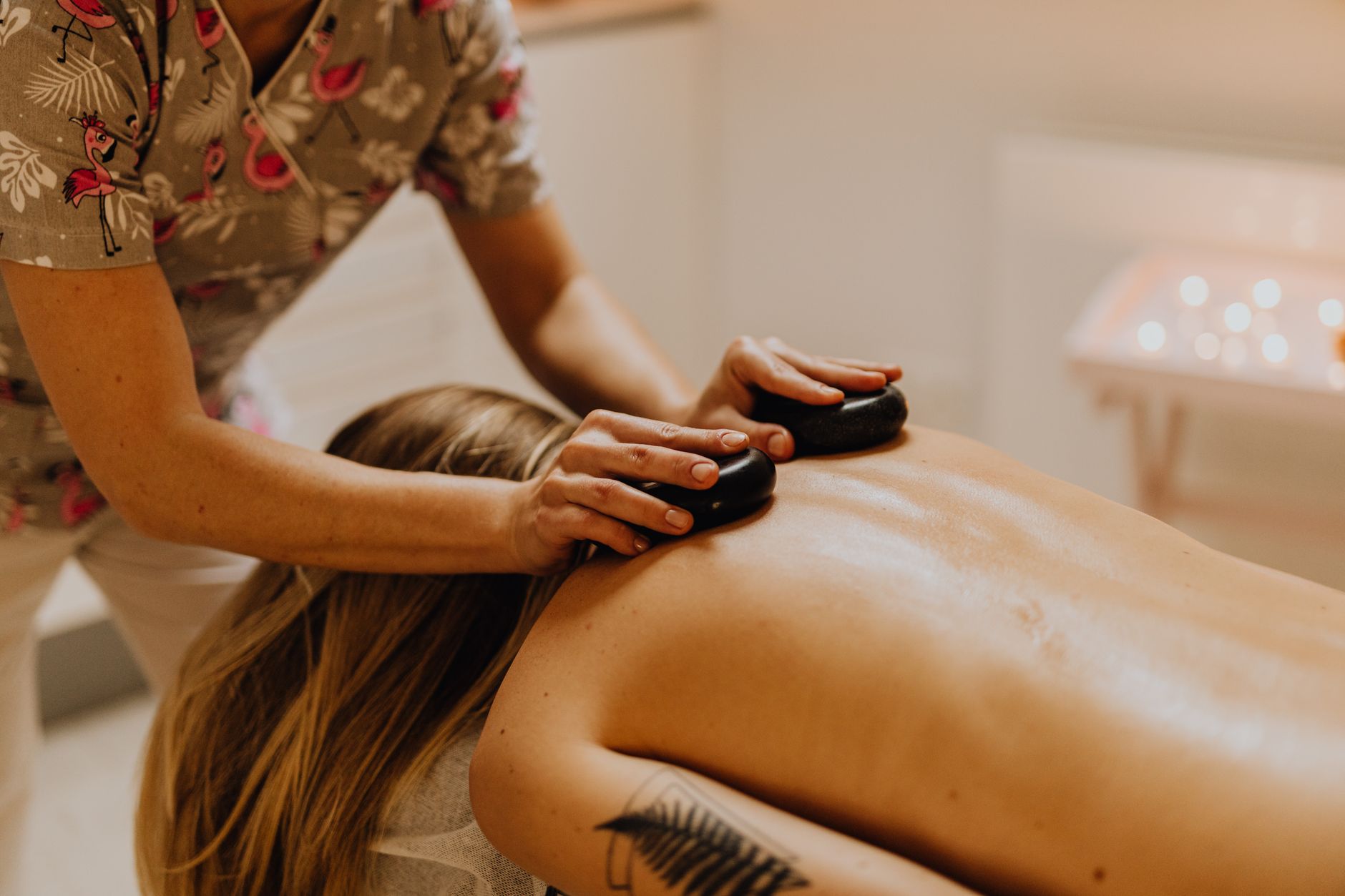
- Placing or handling the stones: some stones are placed along the spine or in the palms to diffuse steady heat, while others are held by the therapist to massage directly.
- Alternating with the hands: the therapist regularly returns to hands-only massage between passes of the stones, to adjust pressure by area.
- Final rest: the session often ends with a few minutes of rest, while the body’s temperature gradually returns to normal.
A full session usually lasts 60 to 90 minutes, longer if combined with a facial treatment or a body scrub.
What are the precautions and contraindications before a hot stone massage?
A hot stone massage is not suited to every situation. Several cases call for caution or a doctor’s advice beforehand:
- Uncontrolled high blood pressure or cardiovascular conditions: heat puts extra strain on circulation, which can be risky with an unstabilised heart condition.
- Diabetes with reduced sensitivity: reduced heat sensitivity raises the risk of a burn going unnoticed in time.
- Pregnancy: prolonged exposure to localised heat is not recommended during pregnancy, particularly on the abdomen.
- Significant varicose veins, recent sunburn or an unhealed wound: direct heat can aggravate these already fragile areas.
When in doubt about one’s own condition, a doctor’s advice before a first session remains the safest option. A careful therapist always asks about these points before starting the treatment, and adapts the stone temperature or skips the heated stones on any area flagged as sensitive.
How to make the most of a hot stone massage
A few simple habits help enjoy a session without any discomfort:
- Speak up about any discomfort: the heat should stay pleasant, never painful; an attentive therapist adjusts immediately if a stone feels too hot.
- Stay hydrated before and after the session, to support the heat’s effect on circulation.
- Plan some rest time afterwards, rather than moving straight into physical activity.
- Space out sessions: once every two to three weeks is enough for a regular comfort routine.
For a shared moment, this treatment also works well as a couples’ format, on the same principle as the options detailed in the guide to a couples’ spa day in Paris, with a double treatment room and synchronised care.
Frequently asked questions
What are the benefits of a hot stone massage?
A hot stone massage combines the heat of basalt stones, warmed to between 50 and 60°C, with classic massage technique. The heat triggers vasodilation that supports blood circulation, helps release muscle tension more deeply than a hands-only massage, and brings a general feeling of relaxation that many find helpful against stress. These effects stay tied to comfort and wellbeing and never replace medical treatment.
How does a hot stone massage session work?
The basalt stones are first heated in a thermostatic water bath, then tested on the therapist’s forearm before any contact with the client’s skin. They are then placed along the spine or held directly by the therapist to glide over oiled skin in a sequence close to a Swedish massage. A full session usually lasts 60 to 90 minutes.
What are the contraindications of a hot stone massage?
A hot stone massage is not recommended for people with uncontrolled high blood pressure, cardiovascular conditions, diabetes with reduced sensitivity, pregnancy, significant varicose veins, recent sunburn, or an unhealed wound. When in doubt about one’s own condition, a doctor’s advice before a first session remains the safest option.
What is the difference between a hot stone massage and a classic massage?
A classic massage relies only on the therapist’s hands, with pressure and rhythm adjusted moment to moment. A hot stone massage adds a constant source of heat, which relaxes muscles deeply before the hands-on work even begins, for a sensation often described as more enveloping and slower to set in.