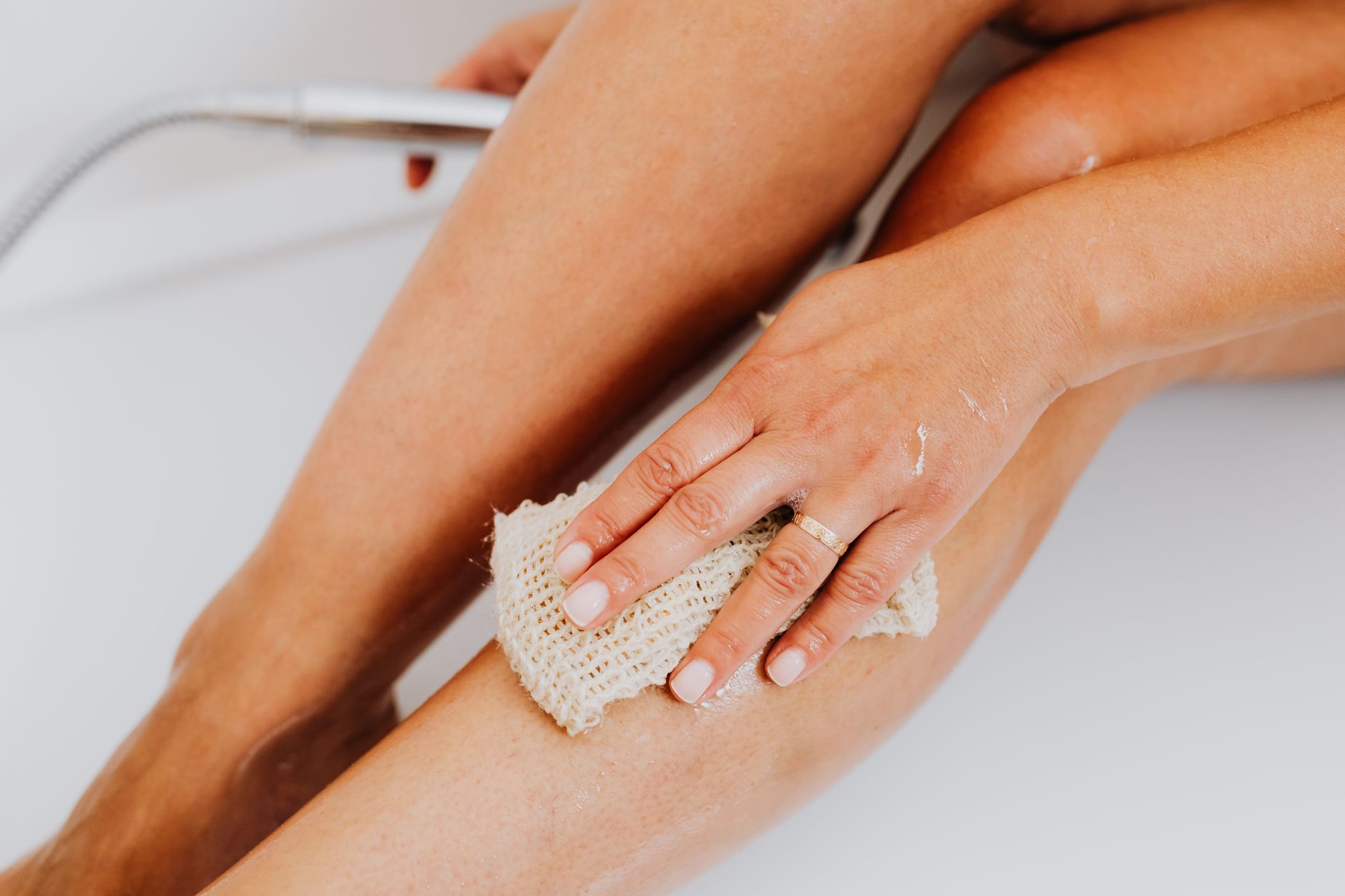
In brief:
- A kessa glove is a crêped-fibre scrub glove (viscose or synthetic fibres), with a grainy texture, traditionally used with black soap during the hammam ritual.
- It is used on wet skin, with a 5 to 10 minute pass in circular motions, followed by a thorough rinse and moisturising.
- Once or twice a week is enough for normal skin, with sessions spaced further apart for sensitive skin.
- On the face, overly firm mechanical scrubbing can weaken small blood vessels: a gentler exfoliant is better suited to this area.
Kessa glove: texture, material and use at a glance
| Texture | Common material | Recommended area | Frequency |
|---|---|---|---|
| Soft | Fine crêped viscose | Body, sensitive skin | Once a week |
| Medium | Crêped viscose, blended with cotton | Body, normal to thick skin | 1 to 2 times a week |
| Coarse | Rough synthetic fibres | Elbows, knees, feet | Once every 1 to 2 weeks |
The choice of texture mainly depends on skin sensitivity and the body area being treated: a soft texture for the face or thin areas, a firmer texture kept for areas where the skin is naturally thicker.
What is a kessa glove?
A kessa glove (sometimes spelled “kassa”) is a traditional scrub glove from the Maghreb, inseparable from the hammam ritual. Once woven from goat hair, it is now usually made from synthetic fibres or crêped viscose, sometimes blended with cotton or polyester.
Its grainy, rough texture provides mechanical exfoliation: in contact with water and soap, the crêped fabric lifts away the dead skin cells built up on the surface, without abrasive particles or chemical agents. It is this simplicity, a textile accessory and a bar of soap, that explains its central place in the hammam ritual.
An affordable price, for repeated use
A kessa glove generally costs between 3 and 8 euros, whatever the texture, at a spa, a pharmacy or a specialist shop. Its lifespan depends on how often it is used and how it is cared for: a glove rinsed and air-dried after each use keeps its scrubbing properties longer than one left damp.
How to look after a kessa glove between uses
A kessa glove is simple to maintain, but a few habits clearly extend its lifespan. After each session, it should be rinsed thoroughly with clear water to remove any trace of soap and dead skin, then hung up to air-dry rather than left folded or balled up, which helps the fibres dry fully between uses. A glove that stays permanently damp loses its texture faster and can become a breeding ground for bacteria. Most kessa gloves are replaced after a few months of regular use, once the fabric softens and the scrubbing effect clearly fades.
How to use a kessa glove step by step
Using a kessa glove follows a precise sequence, inherited from the hammam ritual, which prepares the skin before scrubbing it and finishes with moisturising.
- Soften the skin: take a hot bath or stay under a hot shower for a few minutes, long enough for the heat and humidity to soften the surface layer of the skin.
- Apply the soap: spread black soap, or a traditional soap failing that, over the whole body and leave it to sit for several minutes without rinsing.
- Scrub: rub the wet, soapy skin with the kessa glove, in circular or back-and-forth motions, for 5 to 10 minutes depending on the area, pressing slightly more on rougher areas such as elbows, knees and heels.
- Rinse: rinse thoroughly with clear water to remove the soap and the loosened dead skin, which remains visible on the skin and in the rinse water.
- Moisturise: apply a vegetable oil, such as argan oil, or a nourishing lotion to skin that is still slightly damp, to help close the pores and limit any tight feeling.
This same sequence structures a full hammam session, where scrubbing with the kessa glove happens after the first rounds in the steam room, while the skin has already been softened by the heat.
Dry skin or wet skin?
A kessa glove is always used on wet skin, never dry: rubbed on dry skin, it irritates the epidermis without achieving the same result, since the water and soap play a part in the exfoliating effect by softening the outer skin layer.
How often should a kessa glove be used?
The right frequency mainly depends on skin type. For normal skin, one to two sessions a week are enough to support cell renewal without weakening the skin barrier. For sensitive or reactive skin, it is better to space out sessions, down to once every two weeks, and shorten the scrubbing time.
Using it too often risks a tight feeling, or even minor irritation, since mechanical scrubbing also removes part of the hydrolipidic film that naturally protects the skin. Between two scrubs, a regular moisturising routine helps keep the skin comfortable.
The benefits of scrubbing with a kessa glove
Scrubbing with a kessa glove first improves the look of the skin: by removing the dead cells built up on the surface, it leaves the skin visibly smoother and more receptive to the moisturising products applied afterwards. This is why the gesture almost always comes before applying an oil or cream, which then absorbs more easily.
Rubbing with the glove also stimulates surface blood circulation locally, through a mechanical effect comparable to a light massage: the skin reddens slightly during the session, a sign of a temporary blood flow increase to the area being worked on. The benefits of a black soap scrub, usually paired with the kessa glove, add to this effect through the nourishing action of the olive oil it typically contains.
A mechanical gesture, to adjust by area
Exfoliation with a kessa glove stays purely mechanical, with no active ingredient, which makes it a simple gesture to repeat but also one to adjust: the pressure and duration of scrubbing should match the thickness of the skin in each body area, firmer on elbows and heels, finer on the stomach or the inside of the arms. This same logic explains why the glove pairs so naturally with a steam session beforehand, since warm, humidified skin responds to the scrub with far less friction than cold, dry skin would.
Kessa glove on the face: precautions to know
A kessa glove is designed first and foremost for the body, and using it on the face calls for particular care. Dr Isabelle Masson, a dermatologist interviewed by the health programme Allodocteurs (France Télévisions, article updated on 22 April 2015), points out that overly firm mechanical scrubbing can weaken the small blood vessels of the face and trigger redness similar to rosacea, unlike a chemical peel using fruit acids, which works without grains and puts far less strain on facial microcirculation.
On the face, it is therefore better to reserve the kessa glove for a very light touch, or to prefer a finer exfoliant designed for this area. A few situations call for extra caution:
- Recently waxed area: a kessa glove should never be used right after oriental waxing, to give the skin time to restore its protective barrier, otherwise risking irritation to follicles that are already sensitised.
- Large moles: an area carrying one should be scrubbed with particular care, avoiding any direct rubbing over it.
- Damaged skin: a wound, a cut or an irritated area should not be scrubbed until the skin has fully healed.
Frequently asked questions
How to use a kessa glove?
A kessa glove is used on wet skin, softened beforehand by a hot bath or shower. Black soap is applied to the skin and left to sit for a few minutes, then the skin is rubbed with the glove in circular or back-and-forth motions, without pressing too hard. The skin is then rinsed thoroughly with clear water before applying a nourishing oil or lotion.
How often should a kessa glove be used?
Once or twice a week is enough for normal skin, spacing sessions further apart for sensitive or reactive skin, down to once every two weeks. Using it more often risks irritation or a tight, uncomfortable feeling.
Can a kessa glove be used on the face?
A kessa glove is mainly recommended for the body. On the face, its coarse texture is harsher than a dedicated facial scrub, and overly firm mechanical exfoliation can weaken small blood vessels and trigger redness. It is better to keep the face for a gentler exfoliant, or only lightly graze the skin if the glove is used there anyway.
Which texture of kessa glove should you choose?
A soft texture suits normal to sensitive skin for regular use, a medium texture suits thicker skin that tolerates a firmer scrub, and a coarse texture is best kept for rough areas such as elbows, knees or the soles of the feet.